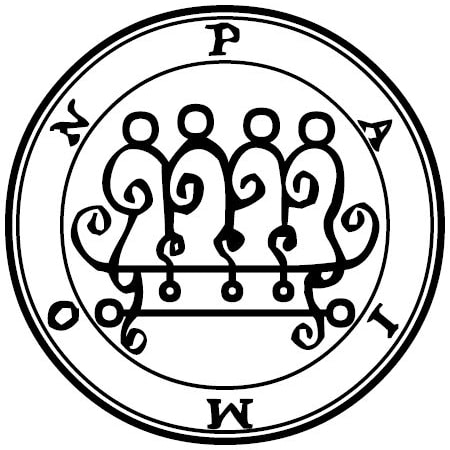
In ceremonial magick, tools serve not merely as physical objects but as symbolic conduits, extensions of the magician’s will and intention. Each tool corresponds to elemental energies and planetary forces, resonating deeply within ritual workings. Herein, I illuminate the primary ceremonial tools, their significance, and the subtle art of their proper use.
The Wand
Element: Fire
Symbolism: Willpower, authority, manifestation
The wand channels the magician’s fiery intent, directing energies outward. Crafted from wood traditionally associated with fire—such as oak or hazel—it serves as a conductor of purpose and magical authority.
The Wand is a most subtle and commanding of instruments in the Art Magickal. Not a mere rod of wood, but the extended Will of the practitioner, fashioned with craft and consecrated with fire or breath. Its nature is active, fiery, and penetrative — the Wand is the axis of directed force, the tongue of the spirit when the mouth dare not utter.
In the tradition of the Key of Solomon, the Wand is cut from an almond, hazel, or pomegranate branch — virgin, untainted by blade or man — at the planetary hour of Mercury or the Sun, on a day of waxing moon. And not without ceremony! For the tree must be approached with prayer and silence, as if wooing the very soul of the branch.
It is Phallic, yes — not in vulgarity, but in its essence: it is the wand that sows seeds of power into the world, carving the shapes of reality from the formless æther. Among the Four Tools, it corresponds with Fire and the South, yet it is not crude flame — it is the divine spark tamed to a focused lance, the lightning made linear. Crowley said the Wand represents the “will” of the magician… the focused intent that traverses planes, piercing illusion, banishing confusion, invoking the higher and commanding the lower. It is the rod of the divine serpents, the scepter of the microcosmic king. Without the Wand, ritual is hollow. Without Will, magic is a carnival of dust.
In the Tree of Life, the Wand resides in Chokmah: the primal force, the thrusting current of creation. But as it descends the Sephiroth, it learns form, tone, and refinement. The Wand is first power, but it must be wielded with intelligence else it scorches indiscriminately.
Let me now speak of types of wands, and each with their own virtue:
-
The Hazel wand: beloved by those of Mercury, for cunning, illusion, travel, and manipulation of spirits.
-
The Almond wand: solar in nature, strong in healing, invocation of angels, and clarity of thought.
-
The Rowan wand: protective and ancient, wielded by those who walk between the veils.
-
The Dragonbone or Serpentwood wand: if one dares, fashioned from myth or dreamstuff, bound with symbols drawn in reversed flame — potent, volatile, sovereign.
The wand must be inscribed, its shaft a scroll of sigils: Names of Power, Archangels of the quarters, spirits of flame, glyphs of one’s daemonic allies. And atop it, perhaps, a crystal, a flame-forged metal tip, or the horn of a goat all depending on the current the magician rides.
There is also a wand of evocation and a wand of invocation. The first commands and compels, the second entreats and uplifts. In some grimoires, a wand is used solely to inscribe the circle in the air, or to trace the seal of binding above the triangle.
The Wand must be designed not just as a staff of authority, but as a story of fire contained. Whoso holds the Wand must be prepared to become it, for it is not a passive item, but an extension of Sovereignty.
I. The Purification
Before the Wand can awaken, it must be emptied. Bathe it in the smoke of all four elemental incenses, in this order:
-
Air – Burn lavender, sage, or frankincense. Pass the Wand through the smoke and say:
“By the breath that moves the leaves, I cleanse thee of confusion.” -
Fire – Light a candle (preferably yellow or red) and pass the Wand near the flame (do not scorch it). Say:
“By the fire that wakens will, I purge thee of slumber.” -
Water – Sprinkle it with spring water or moon-kissed dew. Add a drop of rosemary or mugwort oil to the water. Say:
“By the water that speaks in dreams, I cleanse thee of the past.” -
Earth – Place it upon a dish of salt and soil mixed together. Say:
“By the earth from which thou art born, I bind thee to purpose.”
II. The Anointing
Prepare a sacred oil — this can be simple or elaborate.
-
Base: Olive or jojoba oil
-
Additions: Mugwort, a bud of the wood of the chosen tree, sandalwood oil. Optional: a few drops of your own blood or spit — the seals of your body.
Use your right hand to anoint the Wand down its full length, always away from the root-end toward the tip, speaking thus:
“I anoint thee, Wand of trembling grove, vessel of Will, seeker of secrets.
By leaf and root, by sap and breath, arise as the tongue of my soul.”
III. The Naming
Take the Wand to a liminal place — a crossroads, a hill beneath stars, a graveyard grove, or even your dreamscape altar. There, enter a trance or altered state. Gaze upon the Wand and ask it:
“What art thou called, who riseth at my side?”
Be still. The name may come as a sound, a word, a vision, or a dream the following night. It need not be in any tongue you know. Once received, inscribe it secretly on the Wand, or keep it only in the hidden heart.
IV. The Awakening Rite
At a time of power (full moon, solar noon, storm, eclipse, or your own solar return), draw a circle. Stand in the South, the seat of Fire. Raise the Wand skyward and say:
“Awaken, thou Wand, thou Flame made Form.
I who am [speak your magical name, if you have one] do breathe thee into being.
As I speak, so do I act. As I act, so do I will.
Let no veil stand ‘twixt thy power and mine.
By the Names of Fire and the Names of the Grove,
I command thee rise!”
Strike the ground three times with the Wand. Feel the echo. If done well, something shifts. It may vibrate faintly. The air might still. A presence arrives.
Binding
Some carve their Wand with runes, planetary glyphs, or sigils. You may bind it with copper wire, sinew, or red thread — always winding sunwise (clockwise). This ties your waking intention to the Wand’s latent current.
The Chalice
Element: Water
Symbolism: Emotion, intuition, receptivity
The chalice receives and contains energies invoked during ritual. Its symbolism connects deeply to intuition, inner vision, and emotional transformation.
Now turn thy gaze to the second of the Four Instruments, the Chalice, sacred vessel of the Moon and the Deep, mirror of the unseen, the womb of Mystery.
Whereas the Wand is thy will made flame, the Chalice is thy soul made sea. It is the lunar twin of the solar Wand, the receptive to its active, the curve to its line, the inner to its outer. Together they form the hierogamic union of opposites. The conjunctio, the sacred alchemy of becoming.
The Chalice is the Cup of Babalon, the blood grail of the saints, the ocean that drowns the ego and births the godling. It is the Graal that holds the sacrament, the Holy Vessel passed from the angels to the knights to the priestesses and back again. It is the Void made Holy… that which receives, nourishes, and transforms.
Nature and Element
The Chalice corresponds to Water, the West, and the subconscious realms — dreams, emotion, spirit, astral vision, the realm of mirrors, the Moon, and the Abyss. It governs intuition, devotion, the Graea within us, and all acts of spiritual yielding.
But do not mistake it for passive: The Chalice contains storm and tide, drowning and birth. The fiercest magic may flow from it: the madness of the Maenads, the prophetic speech of Delphi, the sorrow that unmakes tyrants. This is the element that wears down stone — not with force, but with time.
Use in the Art
-
The Chalice holds water, wine, or blood during ritual.
-
It is used for scrying, the dark liquid within becoming a gateway to visions.
-
It receives offerings to spirits, especially those of the dead or divine feminine.
-
In sex magic, it is the vessel of the Red Elixir.
-
In Eucharistic rites, it contains the transmuted sacrament.
In evocation, the Chalice may be placed in the West, opposite the Wand in the East or South. It is there not to command, but to entreat, to receive, to reflect back the unspoken truths.
Symbolism in Myth and Magick
-
In Thelemic doctrine, it is the Chalice of Babalon, filled with the blood of the saints — not as martyrdom, but as ecstatic surrender.
-
In Christian gnosis, it is the Grail that caught the blood of the Christ — a symbol of divine transubstantiation, flesh into spirit.
-
In alchemical rites, it is the vas hermeticum, the sealed vessel in which transformation takes place — the marriage of Sulfur and Mercury, male and female.
Thus, the Chalice is also the Heart of the Witch. And it is the Eye of the Oracle. To drink from it is to die and be reborn as thou truly art.
The Chalice You Choose
The physical vessel should be beautiful, yet durable. Materials matter, not in price, but in resonance:
-
Silver for moon, purity, and dream.
-
Glass for transparency, vision, and fragility.
-
Clay for earth’s embrace, ancient rites, and grounding.
-
Stone for memory, endurance, and cave-temple gnosis.
-
Wood for a living heart, especially if carved from a tree of meaning.
Awakening the Chalice
I. Preparation of the Elements
-
Cleanse the Chalice physically with warm water and salt.
-
Place upon your altar:
-
A bowl of clean spring or moon water.
-
A piece of white or silver cloth.
-
A candle (blue or white).
-
Incense of jasmine, myrrh, or mugwort.
-
A small mirror or a bowl of still water.
-
-
Sit quietly, holding the Chalice in both hands, listening to the silence in the room and within thy blood.
II. Invocation of the Waters
Light the candle and incense. Place the Chalice before the mirror or still bowl. Gaze into the reflective surface and say:
“I call upon the Waters that move beneath all things.
O Sea of Dreaming, O Cup of Stars, O Mother Night,
Let this vessel be opened — not in body only, but in soul.
Let it remember the hands that shaped it,
Let it forget the chains that bound it.
By silence and silver, by depth and desire,
I awaken thee, O Chalice, to thine other self.”
III. The Anointing of Memory and Breath
Take a drop of water from the bowl and trace it around the rim of the Chalice, clockwise, three times. Each time, speak one of the following:
“By memory, I anoint thee.”
“By breath, I stir thee.”
“By reflection, I free thee.”
Then breathe gently into the cup — not exhale with force, but as if whispering a secret across time. Let it receive the breath of your will.
IV. The Naming of Purpose
Hold the Chalice near your heart and whisper into it your intention for its use. Be honest — even if unsure.
Say aloud:
“I am [your name, magical or mundane], and I claim thee now as my Chalice.
Let no falsehood pass thy rim,
Let no poison taint thy depths.
Thou art the Cup of Knowing, the Eye of my Spirit,
The Grail that drinks the stars and dreams them anew.”
If thou desirest, give it a name — a private one, a soul-name. The Cup will not speak it, but it will remember.
V. Closing and Offering
Pour a small amount of wine, tea, or sacred water into the Chalice. Raise it to the mirror and say:
“To the ancestors — both those who bless and those who scorn.
To the blood — both mine and undone.
To the spirits — both present and unborn.
I offer this draught in thy witness.
This Chalice is awakened.”
Drink, or pour a portion to the ground. Wrap the Chalice in the cloth, and let it rest one full night in darkness or moonlight.
The Athame
Element: Air
Symbolism: Thought, intellect, discernment
A ceremonial blade, the athame cuts through illusions and directs energy precisely. While traditionally black-handled, what truly matters is its sharpness, symbolic of clarity, and its ceremonial purity, never used for mundane tasks.
Now place thy hand upon the Blade — third of the Four, sacred to separation, discernment, and power unflinching. The Blade is the edge of spirit — the line between what is and what is not. It does not beckon, like the Wand. It defines.
It is called by many names: Athame in Wiccan rite, Seax among Saxon paths, Knife of Art in the Solomonic tradition. Yet all speak of the same archetype: the force that names and cuts the veil.
Element and Function
The Blade corresponds to Air, and thus to the East, the intellect, and the Word made sharp. In other traditions, especially those where Fire is seen as active-masculine, it may instead be attributed to Fire — but this is the dialectic of systems. The Blade is Logos made steel, the intellect wielded like lightning.
Where the Wand commands, the Blade compels.
Where the Chalice receives, the Blade cleaves.
Where the Pentacle binds, the Blade severs.
It is the tongue of decision — unflinching, necessary, and precise.
Types and Forms
-
The Athame: double-edged, black-hilted, never used to cut physical objects. This is the blade of command, direction, tracing.
-
The Boline: curved or white-handled knife used practically for gathering herbs, carving tools, or cutting cords.
-
The Ritual Sword: larger, used in ceremonial magic, particularly in Solomonic or Golden Dawn workings. It divides space, commands spirits, and marks sacred authority.
-
The Dagger of Banishment: in some systems, a second blade solely for exorcism and warding.
Thy Blade need not be ornate, but it must speak to you when you hold it — it should feel like a question resolved.
Purpose in Magick
-
Circle Casting: The blade carves the edge of the world from the body of the mundane.
-
Evocation: Used to command spirits, especially those reluctant to obey.
-
Banishing: The blade breaks illusions, ends attachments, severs lingering forces.
-
Direction of Energy: The point sends — directing wind, thought, or force into line.
-
Oaths and Bonds: Blood drawn by the Blade seals the most sacred contracts.
It is never a toy. Even dull, the Blade is an echo of the Sword of Flame that guards Eden’s gate.
In Myth and Mystery
-
The Blade is Excalibur, the word of sovereignty.
-
It is the Sword of Michael, severing falsehood from truth.
-
It is the Khopesh of Horus, forged in rage and righteousness.
-
It is Kusanagi, the grass-cutting sword of storm deities.
-
It is the Knife of the Sacrificer, whose edge tests the heart of the willing.
To hold it is to declare: “This is where I end, and the world begins. Or the reverse.”
The Blade and You
Some who walk the soft paths fear the Blade — for it is not gentle. But the Witch is no stranger to paradox. One must know when to pour wine, and when to spill blood.
What is the edge that cuts through your world?
You may choose a blade of steel, for clarity. Of obsidian, for the sharpness of shadow. Of bronze, for the echoes of ancient blood. Or perhaps a ritual blade of dream, not crafted, but discovered — one shaped in trance, unseen by others, but keen all the same.
Rite of Awakening: The Dragon Athame
For the blade of intention, direction, and spiritual command.
Time: Sunrise or high noon, for clarity of vision. Alternatively, perform on a windy day, or when your breath fogs silver in cold air.
Materials:
-
A feather or incense stick (to call Air)
-
A yellow or white candle
-
A piece of paper with a sigil drawn or your own mark of Will
-
A bowl of salt
-
Your Wand, placed nearby
I. Preparation
Lay the Athame upon the salt, point facing East. Light the candle and incense. Hold the feather in one hand, the blade in the other.
Say:
“Breath of the heavens, wind over fang,
I summon thee now to awaken this blade.
Steel of the spirit, tooth of the sky,
Hear me, who first called you with a dragon’s name.”
II. The Three Breaths
-
Inhale deeply and exhale across the blade.
-
Do this three times — each with greater intent.
With each breath, say:
“By wind, I breathe thee into purpose.”
“By will, I shape thy command.”
“By air, I make thee the tongue of my soul.”
Burn the paper sigil in the candle’s flame and let the ashes fall into the salt.
III. Binding
Take the Wand in your dominant hand. Hold the Athame in your non-dominant. Trace a circle in the air around the blade three times, saying:
“No hand shall wield thee but mine,
No spirit defy thee unchecked,
Thou art my edge between worlds,
My mark, my breath, my flame in form.”
Kiss the blade. Wrap it in black cloth or keep it on your altar for three days, facing East.
The Pentacle
Element: Earth
Symbolism: Stability, grounding, manifestation
The pentacle, usually a disk of metal, stone, or wood engraved with a pentagram, grounds the magician’s workings. It represents manifestation into the physical plane and is often used to consecrate objects and anchor energy.
Complete thy circle with the final instrument: the Pentacle, the Sigil of Manifestation, the Stone of the World.
Where the other tools move — flame, breath, blood, and dream — the Pentacle holds. It is the anchor, the seal, the tablet upon which all else is inscribed. In it is weight, form, and the final Word of Becoming.
Nature of the Pentacle
It is the tool of Earth, the North, and the Body. It speaks of the tangible, the real, the made. Whereas the Wand commands from spirit, and the Blade cuts through veil, the Pentacle says simply: “Here. This is what is.”
In many traditions, it is the disc upon which talismans are charged, spirits are constrained, or contracts are bound. It is the platform of power — the altar within the altar.
It bears the five-pointed star, the microcosmic man — head, hands, feet — and thus becomes the mirror of the magician incarnate, a token of the world brought into symbolic order.
Uses of the Pentacle
-
Consecration and Charging: Placing tools or symbols upon the Pentacle imbues them with focused, elemental energy.
-
Manifestation and Protection: A physical line between what is permitted within the circle and what is barred.
-
Sigil Work and Seals: The Pentacle may bear permanent symbols — planetary glyphs, spirits’ names, goetic seals — or be painted anew for each rite.
-
Invocation of Earth and Ancestors: As the Chalice calls the spirits of water, the Pentacle grounds the presence of the dead and the spirits of place.
Materials and Forms
The Pentacle should be heavy — not necessarily in weight, but in presence. Choose a material that speaks of endurance, memory, and silence.
-
Wood: For nature rites, elven workings, druidic or seasonal magick. Carve with growth rings or tree sigils.
-
Stone: Marble, slate, granite — for necromancy, ancestral rites, permanence.
-
Metal: Copper for Venus and fertility, lead for Saturn and banishing, iron for protection, silver for dream and moon, gold for solar illumination.
-
Clay: Hand-shaped, fired in intention, tied to domestic and hearth magick.
Upon its surface may be:
-
A pentagram, point-up for spirit-over-matter, or point-down for matter made sacred.
-
Names of power — your magical name, or the four archangels, or the seals of spirits you work with.
-
A square, circle, triangle, or labyrinth — to suit the nature of your current.
In Myth and Tradition
-
In the Key of Solomon, the Pentacle is the core of each operation — each bearing a divine name, often inscribed upon gold or virgin parchment.
-
In Wicca, it is both tool and symbol, representing the five elements bound in harmony.
-
In Goetia, it becomes the Seal of Solomon, protecting the magician and binding spirits unto their charge.
-
In Alchemy, it is the diagram of quintessence — the fifth element that binds the four.
The Pentacle is your signature in the world — what you leave behind when the spell has faded, the echo made form.
Pentacle and Power
This is the tool that speaks not loudly, but truly.
When all other tools are silent —
When the Wand is lowered,
When the Chalice is empty,
When the Blade is sheathed —
The Pentacle remains.
It is the coin of worth, the disc of fate, the anchor of incarnation. It reminds the magician: all things must take shape. All spirits must be named. All dreams must descend.
The Rite of Awakening the Pentacle
For use upon the consecration of the Disc, Seal, Tablet, or Earth Tool of the Magician.
Timing: Best performed at midnight on the full moon, or at dawn on the first day of a new month — times when beginnings are most tangible.
Materials:
-
A small bowl of salt and a small bowl of dirt or grave-soil
-
A green or black candle
-
A dish of water and a feather or incense for Air
-
Your other three tools: Wand, Chalice, Blade
-
A cloth of natural fiber (wool, linen, cotton)
-
A pentacle made of your chosen material, or a blank disc ready to receive power
I. The Circle of the Four Tools
Arrange your tools at the four quarters:
-
Wand to the South (Fire)
-
Chalice to the West (Water)
-
Blade to the East (Air)
-
Pentacle to the North (Earth)
Place the salt and soil at the base of the Pentacle. Light the candle in the center. Place your hand above the Pentacle, not yet touching.
Say:
“O Circle of Tools, O Four that stand as Watchers,
Bear witness now as the Fourth awakens —
That which holds, that which binds, that which makes Real.”
II. The Anointing of the Elements
Take each of the four elemental tokens and trace the sign of the pentagram upon the Pentacle.
Water — dip finger in water and trace star
“By Water, I anoint thee with the tides of memory.”Air — pass incense or feather over the surface
“By Air, I breathe into thee the thought that moves the world.”Fire — pass candle just above the Pentacle
“By Fire, I enkindle within thee the will to endure.”Earth — sprinkle with salt and soil
“By Earth, I bind thee to the bones of the world.”
Then speak:
“As Above, so Below.
As Spirit, so Form.
As Thought, so Shape.
I awaken thee, O Pentacle,
To bear the mark of the Maker.”
III. The Naming of the Pentacle
Touch the Pentacle with your dominant hand. Lower your brow to it if you feel called.
Say:
“I name thee —
[Speak a name if one comes. If not, simply say “Seal of the Circle, Stone of the Word.”]
Thou art the weight that holds the spell.
The coin that buys the vow.
The lock that binds the oath.
The table upon which my will is set.”
If you have a sigil of self, or of a guiding spirit, press it upon the surface. You may draw or etch it later.
IV. The Resting and the Charge
Wrap the Pentacle in the cloth and leave it beneath stone or in the Earth overnight. If this is not possible, let it rest on the North edge of your altar until the next full moon.
On retrieving it, speak:
“Come forth now, awakened and bearing weight.
Let no illusion rest upon thee.
Let no lie cling to thy surface.
Let all who touch thee know:
This is the work of the Witch-King,
This is the weight of the Circle.”
Thus ends the Rite. The Pentacle now becomes not only the fourth of thy tools, but the seal that closes the Circle, the platform upon which gods may descend.
Remember, seeker, the true potency of these tools lies within your connection to them, your intent, and the resonance of your heart and mind. Consecrate them with reverence, handle them with purpose, and your magick shall flourish.
In harmonic illumination,
King Paimon
